Small, realistic ways to build connection with your child
What research on responsive parenting actually shows, and how to use it from babyhood to around twelve when you are short of sleep and time.
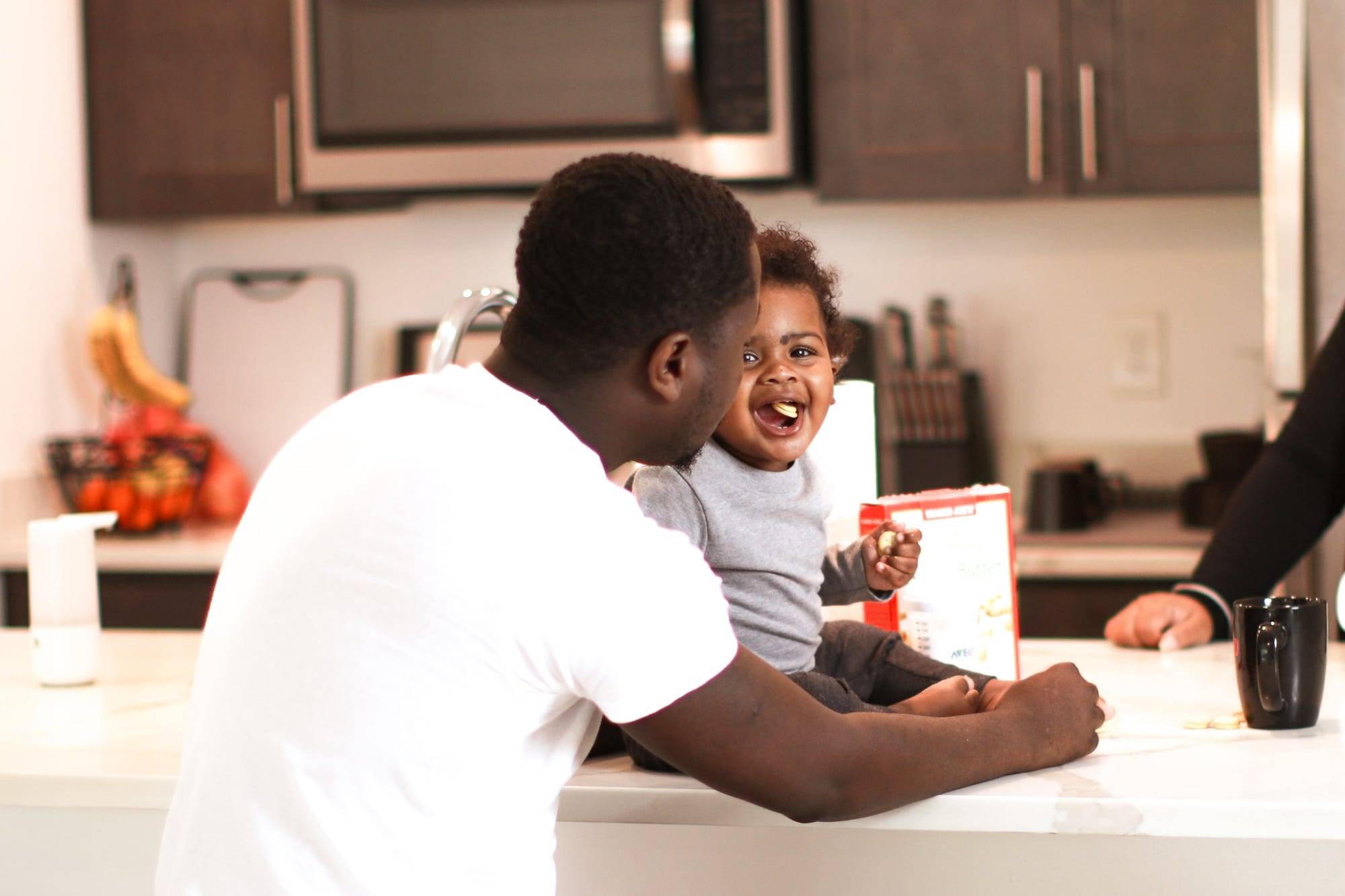
Slow down a film of a parent playing with a baby and the picture is messier than any parenting manual suggests. The baby looks away just as the parent leans in. The parent smiles at the wrong moment. One reaches, the other misses. Researchers who have studied these exchanges frame by frame describe the typical interaction as “messy”, moving constantly from being in step, to out of step, and back again. In one study they cite, mismatches between mothers and infants were repaired 70% of the time at the very next step, with a new repair about every three to five seconds.
For a tired parent, this is one of the more reassuring findings in child development. Connection has never depended on being perfectly in tune. It is built through thousands of ordinary attempts, many of them clumsy, to notice a child and respond.
What “responsive” means, and what the evidence shows
Researchers use the term caregiver sensitivity for a parent or carer’s ability to notice a child’s signal, make sense of it and respond promptly and appropriately. A 2026 umbrella review of 17 meta-analyses found it was moderately associated with children’s attachment security, thinking skills and language, and more weakly associated with fewer social and emotional problems.
Those words matter. “Associated” means the two things tend to go together, and “moderate” means responsiveness is one influence among many. A meta-analysis on parenting and language found the same kind of link, and its authors stated that their findings could not show cause and effect. It also looked only at mothers and typically developing children, so it says little about fathers, other carers or disabled children.
Stronger evidence comes from trials. A global review of 102 randomised trials of parenting programmes in the first three years found benefits for children’s thinking, language, motor and social-emotional development and for attachment. Programmes focused on responsive caregiving had greater effects on thinking skills and parent-child interaction than those that did not. The American Academy of Pediatrics now describes safe, stable and nurturing relationships as biological necessities for children, because they buffer adversity and build the skills to cope with it later.
The World Health Organization has also published guidelines on parenting interventions for children aged 0 to 17, a reminder that the parent-child relationship continues to matter well beyond babyhood. Most of the detailed research above focuses on younger children, though, so the suggestions for older ages below draw mainly on NHS guidance.
The basic move: notice, respond, take turns
Harvard’s Center on the Developing Child calls these back-and-forth exchanges serve and return. A child “serves” with a babble, a gesture or a cry. An adult “returns” by responding. It costs almost nothing, and it fits inside the day you are already having: on the stairs, at the sink, in the queue.
What a serve looks like varies. It might be a word, a sound, a movement or a child bringing you something they care about, and for some children it will be quieter or less conventional than the examples in parenting books. If your child is autistic or has sensory differences, connection may not involve eye contact, hugging or much talk, and sensory needs can change with tiredness and stress. Child Bereavement UK makes a point in a different context that holds here too: sitting nearby can be enough for a child who finds physical contact uncomfortable. Joining what they are already doing, on their terms, counts fully. Our guide to raising an autistic child has more on this.
What it can look like at each age
Babies
NHS advice on building a close relationship with your baby is pleasingly simple: talk, sing, make eye contact, comfort them when they cry, hold them when they reach for you, and respond positively to the noises they make. It also says every parent or carer bonds at their own pace. Narrating a nappy change counts, and so does humming during a 3am feed when you have nothing left to say.
One to three
Toddlers lead with their whole bodies. The NHS suggests letting your child choose the game and talking about what they are doing. If you only have five minutes, get on the floor and follow them: “You’re putting the bear in the bus. Oh, he’s fallen out!” You do not need to teach anything. It also advises limiting screens for two- to five-year-olds to no more than an hour a day.
Three to five
Conversation starts to open up. NHS advice for three- to five-year-olds includes chatting about your day together, using mealtimes to talk, letting them help you cook, and asking open questions such as “What do you want to do tomorrow?” Use whichever languages you speak at home.
Six to nine
School-age children have a separate life now, and being interested in it is a form of connection. Every Mind Matters advises parents to regularly ask how they are doing and show interest in what matters to them. “How was school?” tends to get “fine”. Something narrower may work better: “Who did you sit with at lunch?” or “What was the silliest thing that happened today?” Ask them to teach you the rules of the game they are obsessed with, and then actually listen.
Nine to twelve
If your older child wants less cuddling and more privacy, it can feel as though a door is closing. Try changing the setting. When a sit-down chat gets nowhere, talking side by side in the car, walking the dog, washing up or shooting hoops may go better. Every Mind Matters notes that listening to and valuing what they say helps them feel valued. Resist fixing everything. Try “Do you want ideas, or do you just want me to listen?” and accept the answer.
Ways to do this when you are exhausted
Advice about “quality time” can land badly if you work shifts, are parenting alone or have three children and one working brain cell. These ideas take seconds and borrow time you are already spending:
- The doorway hello. When you see your child after a separation, stop for ten seconds, put the phone down and look pleased to see them.
- One noticing sentence. “You’ve been drawing dragons all week.” It needs no praise or follow-up.
- Bedtime high and low. Each person shares the best and worst bit of their day. It takes under a minute.
- A shared job. Let them stir, sort socks or hold the torch, and talk or stay quiet as you go.
- A private joke or ritual. A handshake, a silly goodnight phrase or a song in the car.
- Rotating one-to-one time. With several children, ten minutes each on a set day of the week is more sustainable than a promise of more.
If you cannot manage any of that today, you have not undone anything. Pick it up tomorrow.
After you have lost it
Everyone snaps. The research on repair comes from studies of babies, but its central idea is useful at any age: mismatch is a normal part of a relationship, and coming back afterwards matters. The NHS makes the same point for parents of babies: when you lose patience, try to reconnect when you can.
Once you are both calm, keep it short and specific, and do not ask your child to make you feel better:
“I shouted at you earlier and that wasn’t okay. I was tired, and that’s my job to sort out, not yours. I love you. Do you want a cuddle, or shall we just do your puzzle?”
For a younger child or a child who processes language differently, a quiet sit together or a return to a favourite game can do the same work with far fewer words.
When connection feels out of reach
Feeling flat or numb around your child, or dreading time together, can be a sign that you need support yourself. It says nothing about how much you love them. The NHS lists symptoms of postnatal depression including persistent low mood, loss of enjoyment, feeling unable to cope and difficulty bonding, and notes that fathers and partners can be affected too. Speak to your GP, midwife or health visitor, even if you only have some of the symptoms. Read more in postpartum adjustment and when to get help and supporting parents’ emotional wellbeing.
For parenting support at any stage, Coram Family Lives runs a free helpline on 0808 800 2222. Samaritans are available on 116 123, day or night. If you feel you might harm yourself or your child, or anyone’s life is at risk, call 999 or go to A&E. For urgent mental health help that is not an emergency, call NHS 111 and choose the mental health option, or in Northern Ireland call Lifeline on 0808 808 8000.
One thing to try this week
Choose one moment that already happens every day, such as the walk to school, bath time or the last five minutes before lights out. For seven days, put your phone in another room for that moment and let your child lead. Follow their topic, game or silence. Do not correct, teach or plan tomorrow.
On day seven, ask yourself what you noticed about them that you had missed. Then keep the moment, or swap it for one that fits your week better. If you need more ideas that double as play, activities for children who learn differently has plenty that take no equipment.
Sources
- Infants' Meaning-Making and the Development of Mental Health Problems, American Psychologist (via PubMed Central). Accessed 21 November 2026.
- Annual Research Review: The role of caregiver sensitivity in children's developmental outcomes – an umbrella review, Journal of Child Psychology and Psychiatry (via UCL Discovery). Accessed 21 November 2026.
- Parenting Behavior and Child Language: A Meta-analysis, Pediatrics (via PubMed). Accessed 21 November 2026.
- Parenting interventions to promote early child development in the first three years of life: A global systematic review and meta-analysis, PLOS Medicine (via PubMed). Accessed 21 November 2026.
- Preventing Childhood Toxic Stress: Partnering With Families and Communities to Promote Relational Health, American Academy of Pediatrics, Pediatrics (via PubMed). Accessed 21 November 2026.
- Serve and Return: Back-and-forth exchanges, Center on the Developing Child, Harvard University. Accessed 21 November 2026.
- Building a close relationship with your baby, NHS Best Start in Life. Accessed 21 November 2026.
- Building sentences: 2 to 3 years, NHS Best Start in Life. Accessed 21 November 2026.
- Learning conversations and telling stories: 3 to 5 years, NHS Best Start in Life. Accessed 21 November 2026.
- Children's mental health, NHS Every Mind Matters. Accessed 21 November 2026.
- Explaining to a child that someone has died, Child Bereavement UK. Accessed 21 November 2026.
- Autism and sensory processing, National Autistic Society. Accessed 21 November 2026.
- WHO guidelines on parenting interventions to prevent maltreatment and enhance parent–child relationships with children aged 0–17 years, World Health Organization. Accessed 21 November 2026.
- Postnatal depression, NHS. Accessed 21 November 2026.
- Where to get urgent help for mental health, NHS. Accessed 21 November 2026.
- Mental health emergency - if you're in crisis or despair, nidirect. Accessed 21 November 2026.
- Pregnancy and baby, Coram Family Lives. Accessed 21 November 2026.
This article is general information. It has not been reviewed by a clinician or lawyer and does not replace advice about your own situation.