How to build family traditions that include everyone at the table
Practical ways to shape celebrations around the family you actually have, across faiths, cultures, two homes, and sensory or disability needs.
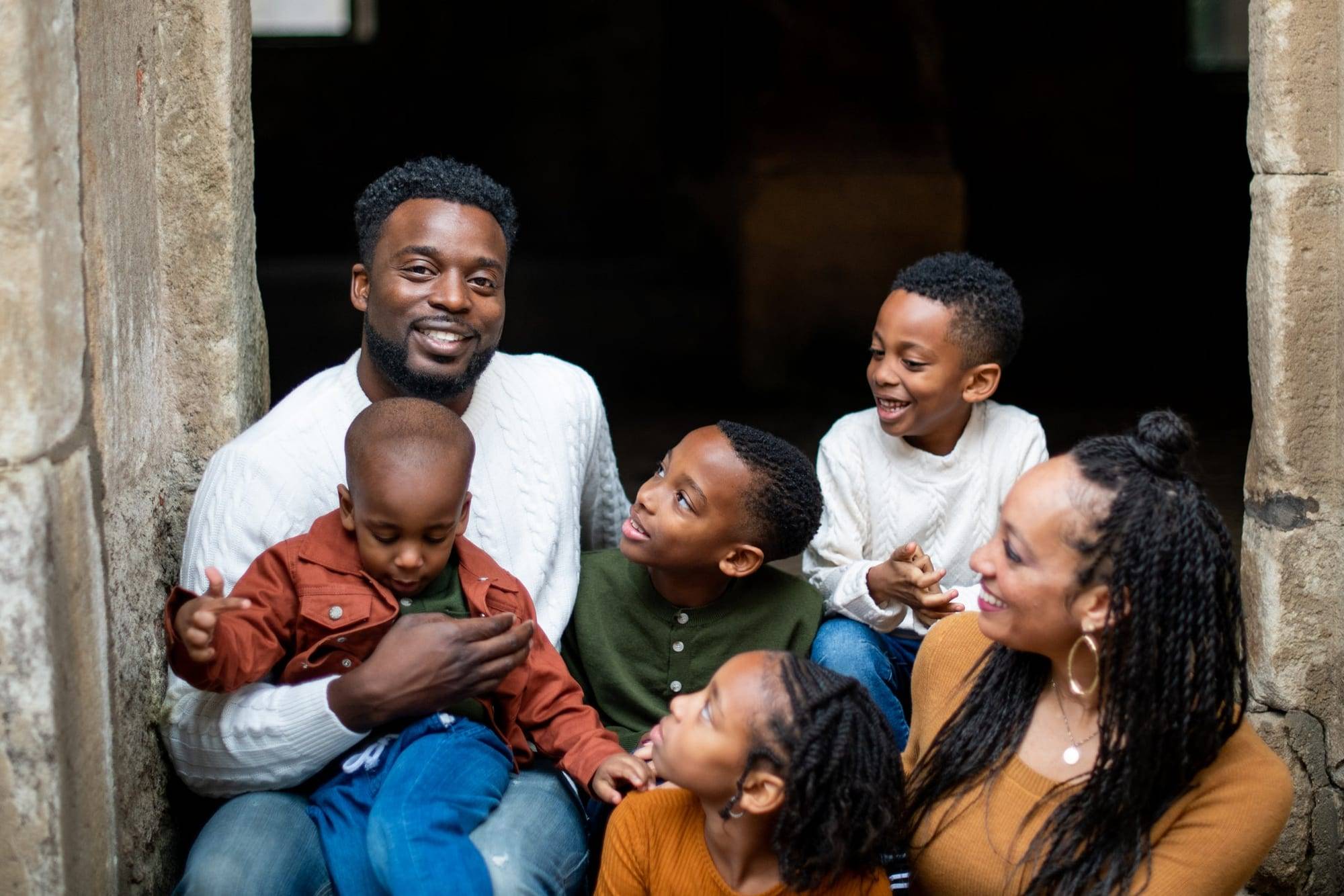
The Christmas cracker is a small, cheap object that can undo a whole meal. For a child who finds sudden noise painful, the bang comes without warning, the paper hat itches, and the table erupts in laughter at the moment they most want to leave it. The National Autistic Society’s Christmas tips for autistic people and families suggest simply skipping crackers and other loud, startling items. It is a modest change, and it raises a larger question for any family: who is this tradition actually for?
Most traditions arrive by inheritance. Someone’s parents did it, so it carries on, often without anyone checking whether it still suits the people now sitting down together. That group might include two faiths, or none, a stepchild who spends alternate weekends elsewhere, a grandparent who uses a wheelchair, and a child for whom a crowded room is distressing. A tradition that works for them will probably look different from the one on the greetings card.
What the research can and cannot tell you
A widely cited review of 50 years of research on family routines and rituals offers a helpful distinction. Routines are the observable, practical things a family does. Rituals are symbolic: they carry a meaning about the family and its shared life. Across the 32 publications reviewed, routines and rituals were related to parenting competence, child adjustment and marital satisfaction.
The authors were also candid about the weaknesses of that research, including inconsistent measurement and a reliance on convenience samples. So the evidence supports a link between shared rituals and family wellbeing. It does not show that any particular ritual produces a good outcome, and nothing in it suggests a family needs an elaborate one.
A later systematic review of 39 studies on families living with a chronic health condition is especially useful for families whose celebrations have had to change. It found that a family member’s condition affected how often rituals happened and what form they took. Those shared moments still offered emotional support and a sense of normality, and they were linked with better health and adaptation for patients and relatives. Changing the shape of a tradition, in other words, does not have to mean losing what it gave you.
Start with the meaning, then change the format
Before adjusting anything, work out what a tradition is for. A big Sunday lunch might really be about seeing Grandad every week. A birthday party might be about a child feeling celebrated. Once the purpose is clear, the format becomes negotiable.
Imagine a nine-year-old who cannot tolerate the smell of a roast and finds a table of twelve overwhelming. If the point of the meal is being together, that child could join for pudding, eat a familiar food at a smaller table, or spend the afternoon on a walk with one favourite relative. The family keeps what mattered and drops what was causing harm.
Three questions tend to clear things up:
- What does this tradition give us that we would miss?
- Who finds it hard, and have we asked them?
- Which part is essential, and which part is just how it has always been done?
Several faiths, or none, in one home
Mixed households are an ordinary part of life in England and Wales. In the 2021 census for England and Wales, 46.2% of people described themselves as Christian, 37.2% said they had no religion and 6.5% described themselves as Muslim, with many other faiths also represented. In 10.1% of households, two or more ethnic groups were represented. Plenty of children are growing up with more than one set of festivals, foods, languages and expectations.
Blending everything into a single hybrid celebration is one option. Another is to keep each tradition intact and take turns being host and guest. A child can join a relative’s festival with curiosity and respect without being asked to adopt its beliefs, and a parent with no faith can still help cook for a day that matters to their partner.
A few habits make this easier for children:
- Give a one-sentence explanation a child can repeat to a friend, such as “This is the day Grandma’s family celebrates, and we go to help her.”
- Ask the relative who holds the tradition what matters most to them, so that any adaptation is made with them and not around them.
- Let older children say which parts they want to take part in, and treat their answer as a real one.
- Add at least one tradition that belongs only to your household and has no religious or cultural claim on it, such as a first-frost hot chocolate or an annual family photo in the same spot.
Our guide to raising children in multicultural families looks at language, identity and extended family in more depth.
When a family lives in two homes, or has changed shape
Fixed dates put particular pressure on separated families. Gingerbread’s advice for single parents at Christmas suggests agreeing early where a child will spend the holidays, talking older children through the plan, and starting new traditions, such as a Christmas Eve pyjama night or cooking together. It also points out that missing the day itself still leaves other chances to celebrate across the season. Moving a celebration by a few days is a legitimate choice.
Coram Family Lives suggests parents work together so that birthdays and celebrations are shared fairly and keep handovers calm and predictable. You could also choose a tradition that travels with the child, such as a particular bedtime story on birthdays, so it can happen in either home. For more on step-relationships and shared calendars, see parenting in blended families.
Children in foster care may carry more complicated feelings into a celebration. The Fostering Network’s guidance for foster carers at Christmas notes that the season can bring back sadness. It advises confirming any family contact well in advance, talking with the child about how the holidays will be marked in a way that respects their traditions and beliefs, and checking plans with the supervising social worker. Spreading presents over several days and keeping familiar routines can also lower the pressure.
After a death, a tradition can become almost unbearable or deeply comforting, sometimes both in the same year. Child Bereavement UK’s page on managing special occasions says families can keep the traditions that comfort them or start new ones, and that relatives may want different things from the same day. One shared moment of remembrance, such as lighting a candle or cooking the person’s favourite meal, can give everyone room. It also suggests asking school what is planned for days like Mother’s Day or Father’s Day, so a child can choose whether to take part. If your family is going through a major change, our article on supporting children through family change covers what tends to help at each age.
Designing for sensory and access needs
The most useful adjustments are usually decided before the day, with the person they affect. The National Autistic Society recommends involving your autistic family member in planning and telling guests about adjustments in advance. Sensory needs also shift: its guide to autism and sensory processing explains that sensitivity can vary over time and between environments, partly with tiredness and stress. Something that worked last year may not work this year, and that is no one’s failure.
Drawing on that guidance and on Sense’s advice for planning an accessible celebration, a host could check the following:
- Lights and decorations. Keep lights steady, since flashing lights can trigger epilepsy or migraines, and leave one room undecorated.
- Noise and smell. Lower the music, avoid scented candles and diffusers, and drop crackers.
- Food. Keep familiar foods available and ask about allergies and conditions such as coeliac disease or diabetes when you invite people.
- Getting in and around. Check for step-free access, room to move past furniture and a toilet that is genuinely large enough to use.
- A way out. Set up a quiet space, agree how long you will stay, and make leaving early an ordinary option.
- Greetings and clothes. Let a wave replace a hug, and let comfortable clothes replace the festive jumper.
- Stimming. Make it clear that stimming and stim tools are welcome everywhere, including at the table.
Sense makes a point worth passing on to relatives: disabled guests should not always be the ones who have to ask about access. Sharing that information unprompted is a small courtesy that changes how welcome someone feels. Our guide to understanding sensory differences in children goes further on working out what a particular child finds hard.
One thing to try this week
Hold a five-minute tradition check at a meal or in the car. Ask everyone two questions: “What’s one thing we do that you’d hate to lose?” and “What’s one thing you’d be happy to drop?” For a child who does not use speech, or who finds open questions hard, offer two photos or objects and see which they reach for. Write the answers down and keep the list somewhere you will find it before the next birthday or festival.
Then pick the next gathering on the calendar and send the host a short message in advance. Something like this usually does the job:
We’d love to come. To help things go well, we’ll arrive at two and probably leave around four. Could we use a quiet room if it gets too much? We’ll bring some food we know will be eaten, so please don’t worry about catering for us.
Change the details to suit your child, and send it at least a week ahead so nobody has to work it out at the door.
Sources
- Christmas tips for autistic people and families, National Autistic Society. Accessed 21 November 2026.
- A review of 50 years of research on naturally occurring family routines and rituals: cause for celebration?, Journal of Family Psychology (via PubMed). Accessed 21 November 2026.
- Family routines and rituals in the context of chronic conditions: a review, International Journal of Psychology (via PubMed). Accessed 21 November 2026.
- Religion, England and Wales: Census 2021, Office for National Statistics. Accessed 21 November 2026.
- Ethnic group, England and Wales: Census 2021, Office for National Statistics. Accessed 21 November 2026.
- Christmas, Gingerbread. Accessed 21 November 2026.
- Supporting children living between two homes, Coram Family Lives. Accessed 21 November 2026.
- Preparing for Christmas as a foster carer, The Fostering Network. Accessed 21 November 2026.
- Managing special occasions, Child Bereavement UK. Accessed 21 November 2026.
- How to plan an accessible Christmas party, Sense. Accessed 21 November 2026.
- Autism and sensory processing, National Autistic Society. Accessed 21 November 2026.
This article is general information. It has not been reviewed by a clinician or lawyer and does not replace advice about your own situation.