Balancing identity and motherhood
Matrescence gives a name to the upheaval of becoming a mother. Here is where the idea came from and how it can help with work, relationships and culture.
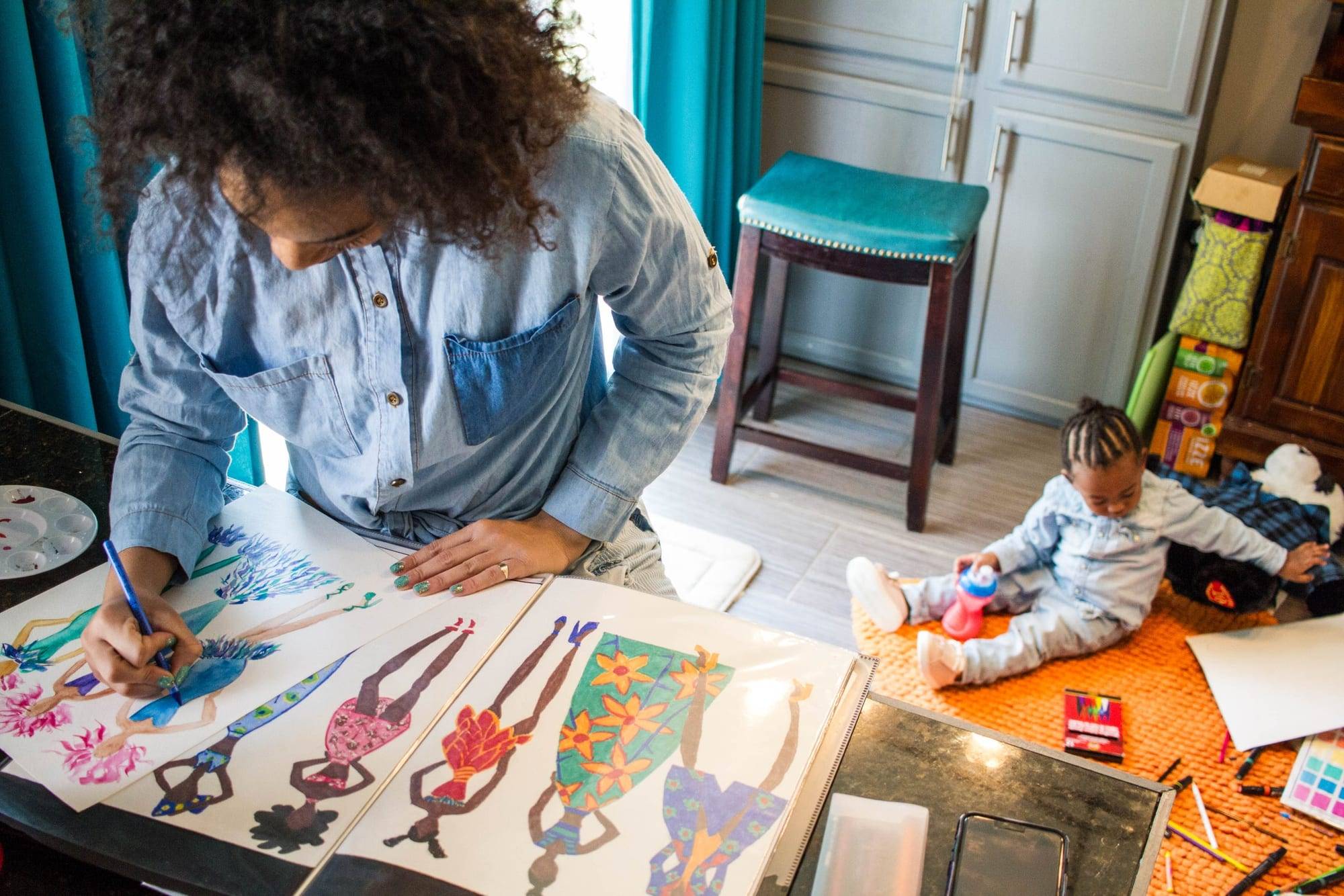
Adolescence has a name, a body of research and a shelf in every bookshop. Parents are warned about it years in advance. The upheaval of becoming a mother, which can alter a woman’s body, sleep, work, friendships and sense of who she is within months, went without a widely used word for most of modern history. When someone finally proposed one, it was then largely neglected for about half a century.
That word is matrescence. It will not fix a sleepless week or a difficult return to work. It can, however, change the question a mother asks herself, from “what is wrong with me?” to “what am I in the middle of?”
Where the word came from
The term was introduced by the medical anthropologist Dana Raphael, who also coined the word “doula”. Her chapter “Matrescence, becoming a mother, a ‘new/old’ rite de passage” appeared in Being Female: Reproduction, Power, and Change, a volume she edited, published in 1975. In it she described matrescence as “the time of mother-becoming”, a critical transition she felt had been overlooked. Popular accounts sometimes give an earlier date, but 1975 is the published source cited in the academic literature.
The modern revival owes much to Aurélie Athan of Teachers College, Columbia University. In a 2024 paper in Frontiers in Psychiatry, she argues that maternal mental health has leaned towards looking for illness, and that a developmental concept can sit alongside diagnosis. Her expanded definition treats matrescence as a lifelong transformation with biological, psychological, social, cultural, economic, political and spiritual dimensions, carrying both difficulties and opportunities.
Two cautions matter. Matrescence is a way of understanding a life stage. It is not a medical diagnosis, and it should never be used to explain away symptoms that need treatment. And it does not belong only to women who have given birth. Researchers writing about the maternal brain point out that parenthood is both biological and social, and that non-birthing parents must also adapt to the demands of caregiving. Adoptive mothers, kinship carers, step-mothers and non-birth mothers may recognise much of this, as our guide to the many paths into motherhood explores.
What the science on “baby brain” actually says
About 80% of new mothers report feeling that their thinking has declined across the transition to motherhood, according to a 2023 review in Trends in Cognitive Sciences. The authors do not dismiss this. They describe measurable changes in some cognitive tasks around pregnancy and early parenthood, at a time when poor sleep, low mood and sharply increased responsibility all add to the load.
Their wider argument is more interesting than the joke. They propose that the demands of raising children may function as a sustained mental challenge, and could contribute to cognitive reserve later in life. This is a framework for further research, and much of the evidence is still emerging, so it should not be read as a promise that motherhood protects the brain. A fair summary for now: feeling mentally stretched in early parenthood is common, it has plausible explanations, and it says nothing about your intelligence or long-term ability.
Work: the identity that gets renegotiated in public
For many women, the return from leave is where the inner shift meets other people’s expectations. A colleague may assume you want less responsibility. You may want exactly that, or the opposite, or something different every month. Knowing your rights makes those conversations less fraught.
In England, Scotland and Wales, all employees have the legal right to request flexible working from their first day in a job, and employers must handle requests in a reasonable manner. A right to request is not a right to receive, but it does oblige your employer to take the request seriously. Northern Ireland’s rules differ: you generally need 26 weeks’ continuous service and can make one statutory request in 12 months.
During leave, keeping in touch days can be a low-stakes way to test how returning feels. You can work up to 10 days during maternity or adoption leave, and up to 20 additional days during Shared Parental Leave, but only if you and your employer both agree. They are optional, and declining them is a legitimate choice.
Pregnancy and maternity is also a protected characteristic under the Equality Act 2010. Unfavourable treatment because you are pregnant, on maternity leave or have a pregnancy-related illness can be unlawful discrimination. If you think this has happened, seek advice early from Acas or, in Northern Ireland, the Labour Relations Agency.
Relationships: when the household changes shape
Couples often expect a baby to bring them closer, and many are surprised by how much of the early strain comes from logistics. The numbers give some context. In the Office for National Statistics’ analysis of March 2022 data, employed women with dependent children spent an average of 84 minutes a day on unpaid childcare and 169 on household work. Employed men with dependent children spent 55 and 106 minutes. Those are averages from one point in time, and they do not describe every family, including same-sex couples and single parents. They do help explain why resentment can build without anyone intending it.
The less visible work counts as well: remembering the vaccination appointment, noticing the shoes are too small, knowing which friend’s party is on Saturday. Naming these tasks out loud tends to be more productive than arguing about who is more tired.
Physical intimacy can also take time to return. The NHS says there are no rules about when to start having sex again after birth, and that it may be some time before you want to. If you or your partner are worried, it suggests talking together and speaking to a health visitor or GP if you need more help.
Friendships shift too, particularly with people who do not have children. It may help to tell a close friend directly: “I can’t do evenings at the moment, but I would love a walk with the pram.” Friends can respond to a specific invitation far more easily than to silence.
If you are parenting alone, some of this advice will need translating. The question becomes who else can carry a share, and that may be a relative, a neighbour, or a local parent group. Our guide to single parenting looks at this in more detail.
Culture: inherited ideas about what a mother should be
Raphael’s original interest was in rites of passage, and in the way many societies mark a woman’s move into motherhood. Many families in the UK live between more than one set of expectations. A grandmother may expect a period of rest at home with special foods. A health visitor may encourage gentle walks. A workplace may expect you back in a matter of months. Social media may offer a fourth version entirely.
One well-studied example is the Chinese tradition of “doing the month”, a period of postnatal rest and care. It is often assumed either to protect mothers or to be outdated, but the evidence is more mixed than either view. A 2023 systematic review of 16 studies found that four linked the practice to lower risk of postnatal depression, two to higher risk, and ten found no significant association. The authors also looked at how relationships and specific stresses around these customs may matter.
A reasonable takeaway is that a tradition’s effect may depend on how it is lived. Being cared for by people you trust feels very different from being supervised by people you cannot disagree with. You are allowed to keep the parts that nourish you, adapt others and explain to family why. If a custom conflicts with medical advice, raise it with your midwife or health visitor, who can help you find a safe way to honour it. For families holding several heritages at once, our guide to multicultural family life has further ideas.
Try this week: the keep, pause, grieve list
Set aside 15 minutes and divide a page into three columns.
- Keep: the parts of your life before children that you want to protect, even in a small form. Perhaps it is reading on the bus, a weekly swim or speaking your first language at home.
- Pause: things you are willing to put down for now, with no guilt and no end date.
- Grieve: things that have changed and that you miss. Spontaneity, a career plan, your old body, a relationship as it used to be. Writing them down does not mean you regret your child.
Then pick one item from the Keep column and arrange it for the coming seven days. Ask someone specific to cover 45 minutes, or book it in your calendar as you would a health appointment. If you share care with someone, swap lists and ask each other: “What would make this possible?”
When this is more than adjustment
Identity upheaval can be uncomfortable without being an illness. But do speak to your GP, midwife or health visitor if you feel low, hopeless, anxious or unable to enjoy anything, or if feelings of guilt and worthlessness are not lifting. The NHS advises getting help even if you only have some of the signs of postnatal depression, which can begin in pregnancy or up to a year after birth. Your 6-week postnatal check includes a conversation about your mental health, and you can use it to say plainly how you have been feeling.
If you want to talk something through with someone outside the family first, Coram Family Lives runs a free, confidential parenting helpline on 0808 800 2222, Monday to Friday 9am to 9pm and weekends 10am to 3pm, closed on bank holidays. If you are having thoughts of harming yourself or your baby, treat it as urgent and read our guide to postpartum adjustment and when to get help, which lists the fastest routes to support in each UK nation.
Sources
- A critical need for the concept of matrescence in perinatal psychiatry, Frontiers in Psychiatry. Accessed 21 November 2026.
- Matrescence: lifetime impact of motherhood on cognition and the brain, Trends in Cognitive Sciences. Accessed 21 November 2026.
- Maternal postnatal confinement practices and postpartum depression in Chinese populations: A systematic review, PLOS ONE. Accessed 21 November 2026.
- Families and the labour market, UK: 2021, Office for National Statistics. Accessed 21 November 2026.
- Flexible working: Overview, GOV.UK. Accessed 21 November 2026.
- Flexible working and work-life balance, nidirect. Accessed 21 November 2026.
- Flexible Working: The Right to Request and Duty to Consider, Labour Relations Agency. Accessed 21 November 2026.
- Employee rights when taking maternity and other types of parental leave, GOV.UK. Accessed 21 November 2026.
- What the law says - Pregnancy and maternity discrimination, Acas. Accessed 21 November 2026.
- Sex and contraception after birth, NHS. Accessed 21 November 2026.
- Postnatal depression, NHS. Accessed 21 November 2026.
- Your 6-week postnatal check, NHS. Accessed 21 November 2026.
- Confidential parenting helpline, Coram Family Lives. Accessed 21 November 2026.
This article is general information. It has not been reviewed by a clinician or lawyer and does not replace advice about your own situation.